


Digital Presence Is a System, Not a Website
Updated: Jul 24
A website is not a digital presence on its own. It’s the core of one.

The Website Is the Core of Your Digital Presence
For many businesses, a website is treated as the finish line. Once it’s live, the assumption is that visibility, credibility, and opportunity will follow. In practice, that rarely happens.
A website is not a digital presence on its own. It’s the core of one, but only when it’s connected to content, structure, and ongoing decision-making. A website without context is static and exists in isolation, quickly becoming outdated or disconnected from what a business actually does. The content lives elsewhere, and conversations happen on other platforms, and updates are made reactively rather than intentionally. This is where many digital presences stall: the website isn’t functioning as a system.
"But I do not need a website; it is just a business card used for Google Business and for directions to my office or shop."
"I have one, but I don't get much traffic, so what is the point?"
“Most of my clients come from Instagram / referrals / WhatsApp anyway.”
“My industry doesn’t really need a website. I’ll invest in a website once the business grows.”
“I just need something simple. I can upgrade later.”
What these myths have in common is that they treat visibility, content, and growth as separate actions.

In practice, this usually shows up as a familiar pattern:
Post more: Posting becomes reactive. Content is created to keep up rather than to build anything durable. Each platform starts dictating what gets shared, rather than the business deciding what matters.
Be more active: “Active” becomes maintenance. Responding, tweaking, adjusting, always doing, rarely stepping back to evaluate whether the activity supports a larger goal.
Get more followers: Followers accumulate, but they’re scattered. They engage in one place, disappear in another, and rarely move beyond the platform where they found you. Most of them are Family or Friends not true clients. How are you reaching new people?
Update the website later: When the website stays on hold, waiting for more time, more clarity, and more proof that it’s worth investing in. Quietly drifting further out of sync with the business itself. Client expectations change. How people search changes. Platforms, design standards, accessibility requirements, and regulations evolve. By the time the website is revisited, it no longer reflects how the business operates or how clients actually find and evaluate it.
I can relate to this cycle. I’ve lived it. The constant posting, the pressure to stay visible, the feeling that if you just keep going, things will eventually click. It looks like momentum from the outside, but from the inside, it’s exhausting. There’s always more to do, and rarely a sense that anything is actually settled. When you get a client, that pattern stops, and you feel you have to start all over again.
This is where a shift in thinking is needed: making your website the core of your digital presence and the center of gravity, and more sustainable in the long run.
A System-Based Digital Presence Is the Solution
A system-based digital presence reduces decision fatigue. It limits the number of choices you have to make each week. It creates a central place where content lives, evolves, and compounds over time. Instead of reinventing messaging for every platform, you’re extending the same core ideas in different formats.
It starts with the website, which was never meant to sit on the sidelines as a static page or a digital business card. The website serves as the core of the system, and the pressure to constantly “keep up” diminishes. It was meant to be the structure to which everything else connects. Content stops being created just to stay visible and starts being created with a purpose. Instead of asking, "What should I post today?", you’re working from a defined structure that already knows what the business needs to say, support, and reinforce. When the website functions as the core, the business's digital presence stabilises.
Long-form content has a clear role: depth, context, trust.
Short-form content has a clear role: visibility and entry points.
Static pages provide stability, clarity, and reference.
Nothing is competing for attention because everything is connected.
This also changes how client work fits into the picture. When your digital presence is system-based, it doesn’t collapse the moment your focus shifts. Client projects can take priority without erasing momentum, because the structure remains in place. Visibility becomes something the system supports, not something you have to personally sustain at all times.
That’s the difference between output-driven visibility and system-driven visibility.
A system doesn’t demand constant energy. It holds space for growth, change, and real life. It allows your business to evolve without needing to be rebuilt every year, every platform shift, or every regulatory change.
The Four Parts of a System-Based Digital Presence
A system-based digital presence isn’t abstract. It’s made up of distinct parts, each with a clear role and each reinforcing the others.
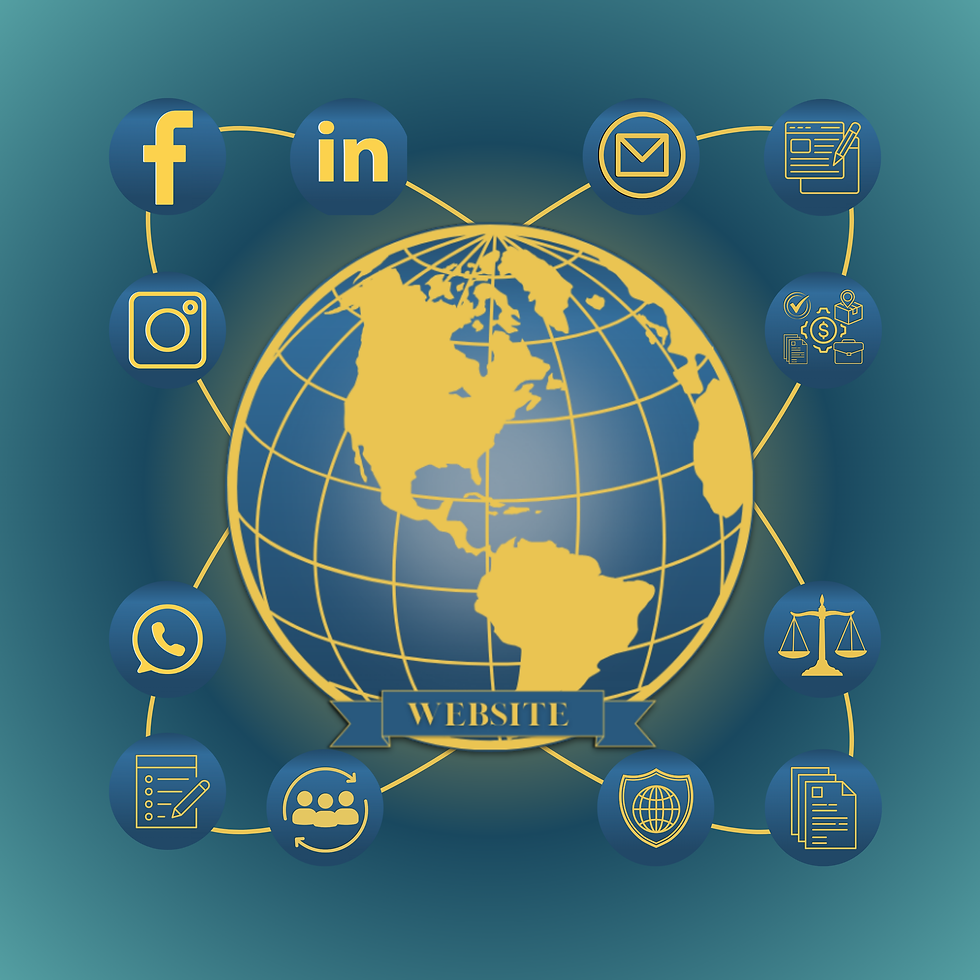
The Hub: This is your website. Not as a collection of pages, but as the place where meaning lives. It defines what the business does, who it’s for, and how everything connects. Without a hub, everything else floats.

The Spotlight: This is visibility — search, social, platforms, referrals. The spotlight brings people in, but it doesn’t carry meaning on its own. Without a hub to land on, visibility dissipates as quickly as it appears.

The Growth Engine: This is where momentum compounds over time. Content, SEO, structured updates, and systems that build on what already exists instead of resetting every cycle. Growth comes from reuse and reinforcement, not constant reinvention.

The Beacon: Recognition and trust. The signals that make people understand who you are, why you’re credible, and whether you’re right for them. When the system is coherent, the beacon is steady — not dependent on constant output.
These four parts don’t work in isolation. When one is missing or overworked, pressure builds elsewhere. When they’re designed together, the system holds.
If visibility feels stressful, the spotlight is doing too much work. That’s usually a sign the hub isn’t carrying enough structure yet.
Bringing The Digital Presence System Together
A digital presence isn’t built by doing more. It’s built by designing how things connect.
When the website is treated as the core of a system, visibility becomes less fragile. Content stops expiring the moment it’s posted. Platforms stop dictating strategy. The business gains something more valuable than momentum: stability.
That clarity allows a digital presence to evolve without losing coherence. Growth doesn’t require constant reinvention. Platform shifts, algorithm changes, and regulatory updates no longer derail progress — because the structure underneath is doing the work.
When people encounter a system-based digital presence, they don’t need convincing. They understand what they’re looking at — and how it fits together.
That’s the difference between visibility that exhausts you and visibility that supports the business.

Does Your Digital Presence Feel Disconnected?
Many businesses don't have a website problem. They have a digital presence problem.
Their website, social media, search visibility, content, customer journey, and business systems have evolved separately over time. The result is a digital presence that feels fragmented, difficult to manage, and harder to grow.
A Digital Presence Review helps identify:
Where your digital presence is disconnected
What is creating friction
What you own and control
Which changes will have the greatest impact on your business
Before investing in a redesign, marketing, or another tool, it's important to understand how your digital presence works as a whole.


